

“I don’t know how to be submissive!”: racial privilege, gender predicament, and shifting positionality among white western women married to Chinese men
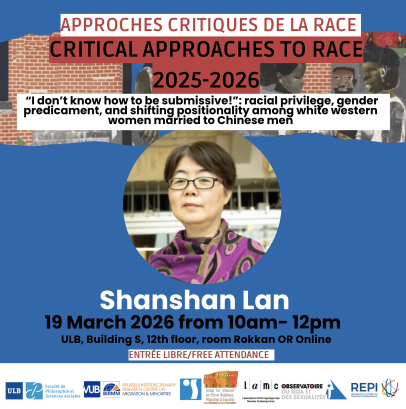
The rise of China’s economy has attracted a new wave of young female professionals from western countries who move to China voluntarily for better job opportunities and cosmopolitan experiences. Unlike the male-dominant transnational elite class, who enjoy considerable institutional privileges in China, these self-initiated migrants usually work in neoliberal niche sectors such as English Language Teaching (ELT), where white looks and western education are fetishized, commodified, and exploited. Existing literature on ELT teachers in Asia mainly focuses on white males and their elevated sexual status among Asian women. Little research has been done on the lived experiences of female ELT teachers. A similar gap also exists in literature on Asian/foreign marriage, which mainly concentrates on Asian women and western men couples. Based on twenty-six semi-structed interviews conducted in multiple Chinese cities between 2019 and 2024, this research examines a new pattern of interracial romance/marriage between young white women and Chinese men within the larger context of the Covid-19 pandemic and the rise of popular nationalism and xenophobia. It highlights the contradiction and intertwinement between white women’s racial privilege in the workplace and gender predicament in the patriarchal Chinese family setting. While being a well-paid, financially independent working woman may grant my participants considerable agency in negotiating gender relations within the domestic sphere, it may also lead to marital problems and domestic violence due to the potential disruption of patriarchal gender roles and some Chinese husbands’ feelings of wounded masculinity. While the majority of the women narrate their experiences in China as highly gendered coming-of-age stories marked by shifting positionalities such as working professional, wife, mother, foreign daughter-in-law, there is a relative lack of reflection on the extension of white privilege from the workplace to the familial domain. I argue that white women’s ambivalence about their racial privilege in a transnational familial context reflects larger structural power dynamics, such as shifting geopolitical relations between China and major western countries, racialized profit-driven business model in the global ELT industry, and growing cultural confidence among grassroots Chinese.
About the speaker
Shanshan Lan is Associate Professor at the Department of Anthropology, University of Amsterdam (UvA). Her research interests include urban anthropology, migration and mobility regimes, comparative racial formations in Asia and Euro-America, transnational student mobility, global cities, African diaspora in China, Chinese diaspora in the United States, and class and social transformations in Chinese society. She is the author of two books: Diaspora and Class Consciousness: Chinese Immigrant Workers in Multiracial Chicago (2012), and Mapping the New African Diaspora in China: Race and the Cultural Politics of Belonging (2017). Both are published by Routledge Press. She is also the co-editor (with Milos Debnár) of Migration, Transnational Flows, and the Contested Meanings of Race in Asia, an open access book published by Springer in 2025.
When: March 19th, 10:00 AM until 12:00 PM
Where: ULB, Campus Solbosch, Building S, 12th Floor, Room Rokkan or online (Teams)